

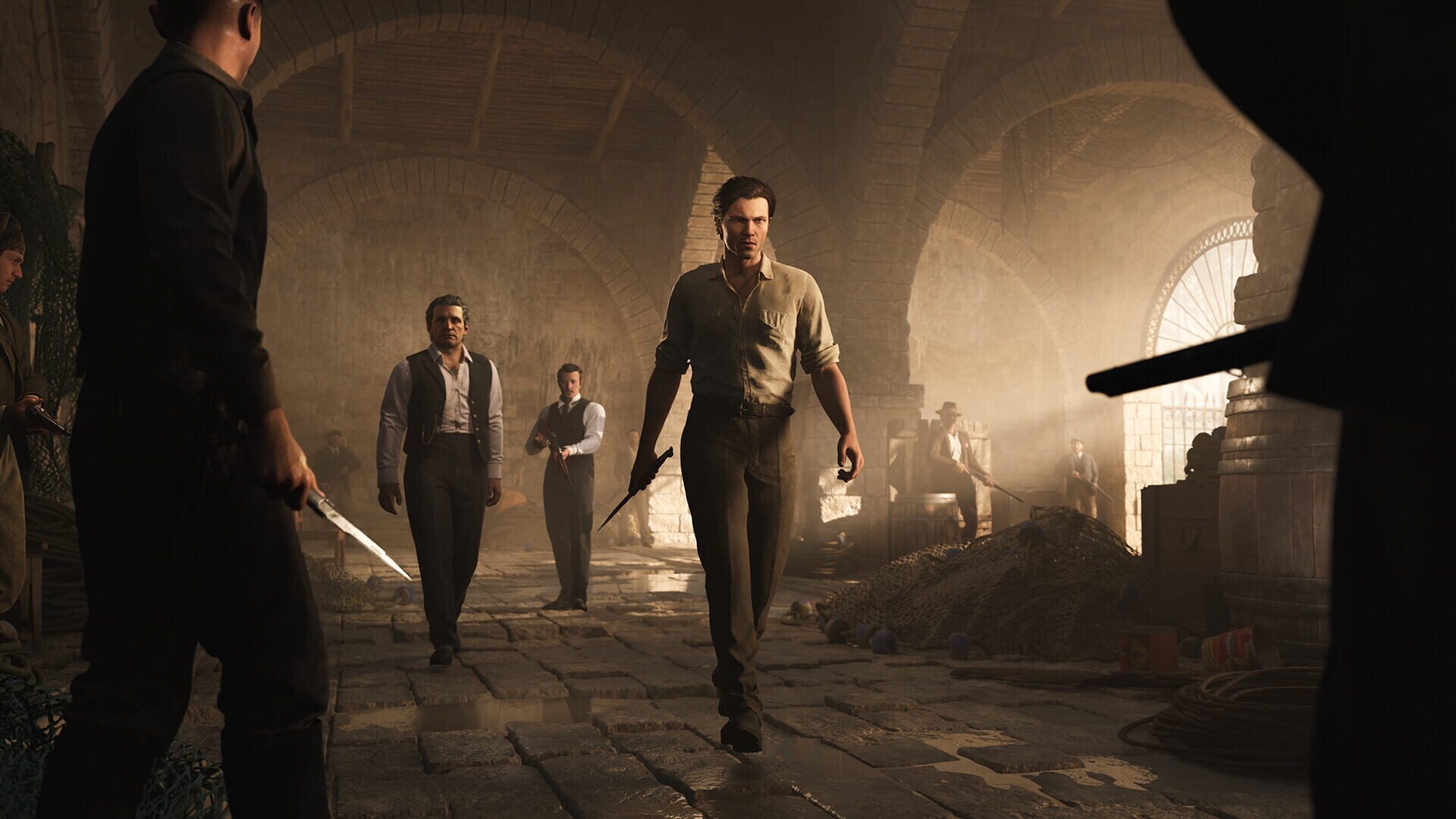
Mafia II remains a high-water mark for the series, so that memory is difficult to ignore while playing Mafia: The Old Country. Hangar 13 returns to the Sicilian origins of the mafia, but the result too often mistakes familiarity for conviction.
Returning to the Roots, But Losing the Pace
The game opens at a deliberately measured pace, which suits its period setting. The problem is that its major turns are visible from a distance. Deaths, betrayals and romantic beats arrive with so little surprise that the narrative begins to feel like a checklist rather than a drama gathering momentum.
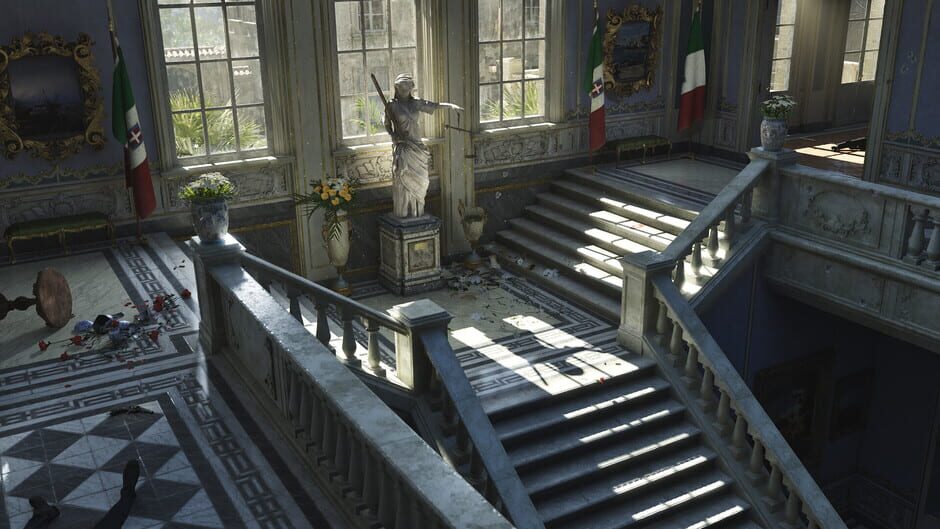
The Sicilian setting has real appeal, but atmosphere alone cannot carry a story that rarely gives its characters or conflicts enough depth to matter.
An Unconvincing Romance
The central romance is the game’s weakest narrative thread. Mafia can make room for intimacy, but this relationship never earns the emotional weight it is asked to carry. The characters have little chemistry, and their conversations often continue long after their point has been made.
Frequent, extended cutscenes slow an already deliberate campaign to a crawl. Instead of deepening the story, they repeatedly interrupt it, leaving the player waiting for the plot to move forward.
Technical Issues That Undermine the Experience
Minor visual problems are easy to forgive when a game’s story and systems are working well. Here, the technical issues regularly interfere with the experience itself.
The Vanishing Body Problem
During stealth encounters, a guard can be hidden in a container only to disappear moments later. That is more than a visual quirk. It undermines the basic logic of a stealth system that asks the player to manage risk and conceal evidence.
The mechanic recalls Hitman without offering the same level of reliability or consideration. In a major release, it leaves the game feeling under-tested rather than polished.
Inconsistent Enemy AI
Enemy behaviour also works against the stealth fantasy. Opponents can appear to spot the player through walls, fail to react credibly when allies are attacked, and follow routines so rigid that encounters quickly become predictable.
- Enemies can seem to detect the player through solid cover
- Reactions to nearby combat are often unconvincing
- Patrol patterns are easy to anticipate and exploit
The gunplay fares no better. Weapons lack weight and feedback, so firefights rarely deliver the tension or impact the setting calls for.
A Narrative Game Without a Strong Narrative
The disappointment is sharper because Mafia: The Old Country presents itself as a story-driven game. Yet its plot relies on familiar mafia conventions without finding a fresh perspective or emotional centre. The characters are functional, but few leave a lasting impression.
That contrast is especially clear next to Mafia II. Vito Scaletta’s moral compromises and relationship with Joe gave that game a human core. The Old Country never finds an equivalent connection.
I Could Not Finish It
As someone who has spent a great deal of time with the series, I wanted to see this one through. I kept playing in the hope that its story would eventually find its footing. It did not.
There is a point where perseverance stops feeling rewarding and starts feeling like an obligation. Mafia: The Old Country reached that point well before its conclusion.
Should You Play It?
Committed Mafia fans may still want to see its setting and story for themselves, but they should wait for a substantial discount, around 70% or more. Everyone else is better served by revisiting Mafia II or choosing another narrative game with stronger writing and more confident systems.
Mafia: The Old Country is a missed opportunity. Hangar 13 had a compelling setting and a celebrated series to build on, but the game settles for a thin romance, familiar plot beats and systems that do not hold together. The herd’s verdict is clear: this return to Sicily is difficult to recommend.
 Add to Wishlist